
How Long Should Australian Businesses Keep Records Before Shredding Them?
For most Australian businesses, the safest starting point is this: don’t destroy records until the required retention period has ended.
Australian businesses face ever‑tightening expectations around the way they handle and dispose of paper records. A misplaced invoice or abandoned personnel file can tip an ordinary data incident into a notifiable breach and, with it, stiff penalties and reputation damage. Regular shredding is still the most reliable way to take sensitive pages out of circulation, yet many organisations remain unsure how often the shredder truck should roll through their car park. The short answer is: often enough to show that you have taken “reasonable steps” to secure personal information, but not so often that you destroy records before their mandated retention period ends. The longer answer involves law, risk and practicality.

The Privacy Act 1988 and the Australian Privacy Principles (APPs) sit at the centre of the national data‑protection framework. APP 11 requires entities to protect personal information from misuse and to destroy or de‑identify it once it is no longer needed. The Office of the Australian Information Commissioner (OAIC) makes it clear that secure destruction methods—shredding included—form part of those “reasonable steps”. On top of the general duty, the Notifiable Data Breaches (NDB) scheme introduces a ticking clock: if unauthorised access to personal information is likely to cause serious harm, the business must notify both the individuals and the OAIC “as soon as practicable”. A locked bin that empties on schedule is one of the simplest ways to reduce that risk window.
The right frequency also depends on how long a document must stay intact. Tax records generally need to be kept for five years, while many ASIC‑regulated documents sit on file for seven years. Health records collect their own special treatment: adult files must be retained for seven years from the last treatment date, and children’s notes must stay put until the patient turns 25. Paper shredding Sydney too early can be as big a compliance misstep as shredding too late; therefore, the first step in any schedule is a clear retention register.
Neither APP 11 nor the Corporations Act prescribes an exact shredding interval. Instead, regulators look for evidence that disposal arrangements match the volume and sensitivity of the information you hold. A suburban accounting practice generating boxes of source documents every fortnight will struggle to justify an annual clean‑out. By contrast, a boutique consultancy that relies on cloud storage and prints only board agendas may be able to defend a quarterly pickup. In other words, frequency is a risk‑based choice.
| Business profile | Typical service | Rationale |
| Large medical centre, major law firm, big‑four branch | Weekly or fortnightly | Constant flow of highly sensitive material and strict statutory oversight |
| Medium‑sized professional services, regional council | Monthly | Balanced volume; ties into monthly records‑management cycle |
| Small boutique agencies, charities, niche retailers | Quarterly | Lower print output; still demonstrates regular “reasonable steps” |
| Archive purge linked to end of financial year | Annually (June/July) | Many retention periods expire after year‑end; shared clean‑out reduces storage costs |
These suggestions are neither minimums nor maximums. They serve as reference points when drafting a policy.
A fixed schedule by paper shredding service Sydney should be backed by one‑off clean‑outs whenever circumstances change. Office relocations, mergers, bulk scanning projects and sudden policy updates can all create piles of paper outside the usual rotation. A reputable document shredding Sydney specialist will build ad‑hoc visits into the service agreement so nothing lingers in temporary storage.
Weekly collection by Sydney document shredding service does cost more than quarterly service, yet the margin often pales beside the price of a privacy breach. The OAIC can now impose penalties in the tens of millions of dollars for serious or repeated non‑compliance. Insurance excesses, incident response bills and lost client trust add further weight. When boards compare those figures, the extra bin lift usually wins the argument.
A well‑judged document shredding near me schedule is less about chasing an arbitrary calendar and more about demonstrating stewardship of information. Start with statutory retention periods, layer in business risk, monitor console fullness and be willing to adjust. Do that, and when the compliance auditors visit you will have the paperwork—and the absence of paperwork—to show that your organisation took sensible, timely action to keep personal data out of the wrong hands.
For most Australian businesses, the safest starting point is this: don’t destroy records until the required retention period has ended.
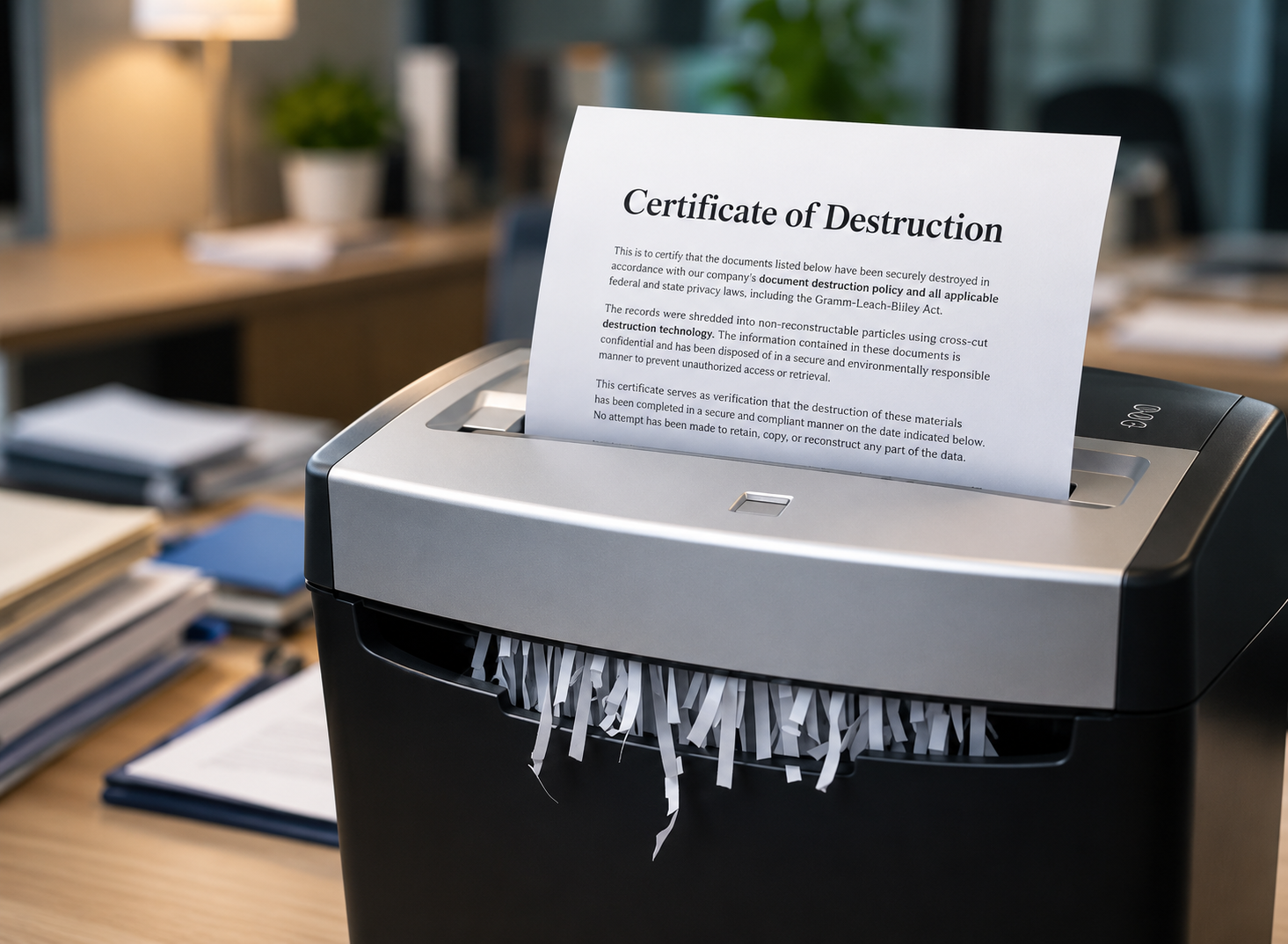
A Certificate of Destruction is one of the most important documents your business can hold after a shredding job. Yet many organisations misunderstand what it actually guarantees. Getting this wrong can leave you exposed during a compliance audit or a data breach inquiry under the Privacy Act 1988 (Cth). Here is a clear-eyed look at what the certificate confirms and, just as importantly, where its limits lie.
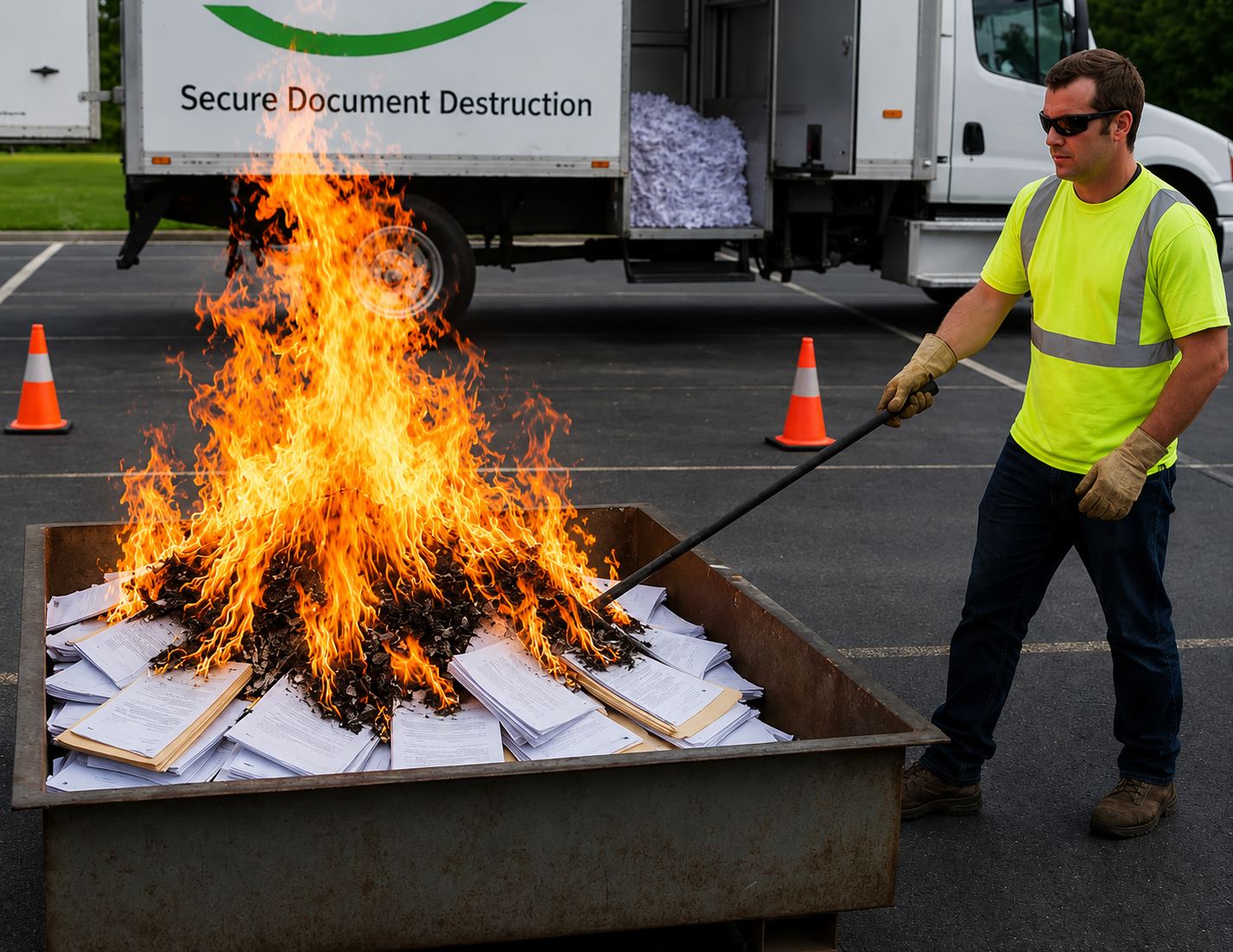
A quick burn can feel like the simplest way to clear out old paperwork. Yet for many households and small businesses, the safest approach is mobile document shredding services that destroy information on-site/off-site and leave far less to chance. Burning can create privacy gaps, safety hazards, and a mess of compliance headaches that only show up when it’s too late.
Book online in minutes. Pick your date and
we'll take care of the rest in a single visit.

© 2026 HelloShred | Privacy Policy | Website Designed & Developed by